AI software helps to triage suspicious lesions
Monday, 23 February 2026
NEWS - eHealthNews.nz editor Rebecca McBeth 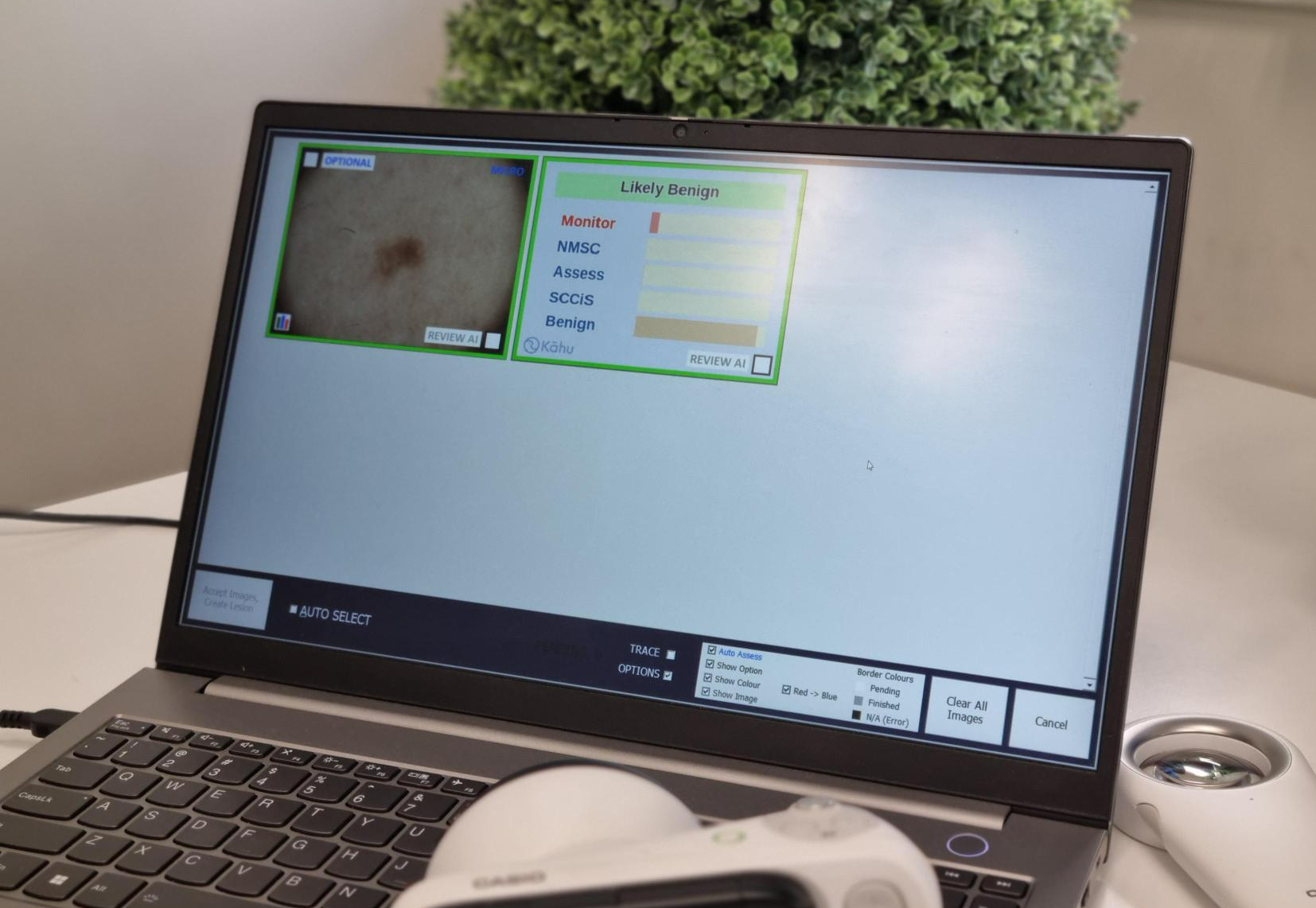
MoleMap's artificial intelligence (AI) software Kahu is processing around 50,000 dermoscopic images per month across New Zealand, with patient acceptance reaching 94 percent over the past year.
Speaking at Digital Health Week in November 2025, chief information officer MoleMap Australia and New Zealand Johan Vendrig said about a quarter of those images are being forwarded to dermatologists for diagnosis.
The AI tool has been operating across New Zealand clinics since January 2024, acting as decision support for melanographers to help them determine which lesions need specialist review.
"The AI is not giving any diagnosis, it is purely decision support used by the nurse to decide ‘should I image this lesion and send it to the dermatologist or should I not do that?’," he explained.
The system gives five possible outcomes for each lesion: malignant, premalignant, actinic keratosis, likely benign, and no result or poor image, to help in consistent decision-making.
Clinical Lead at MoleMap Australia and New Zealand, Lara Wild, said patient acceptance of AI-assisted skin checks has been strong, with only six percent expressing concern about the involvement of artificial intelligence.
“Patients value that a melanographer is conducting their skin examination, and they appreciate that AI supports clinical decision-making by providing an additional layer of reassurance,” Wild said.
She also highlighted the critical shortage of dermatologists in New Zealand.
“We have a limited number of dermatologists, and it takes a minimum of 12 years to train one. The question is whether we can realistically train enough specialists to manage every skin cancer diagnosed across New Zealand and Australia,” she said.
Wild explained that Kahu also functions as a training and quality assurance tool. It enables supervisors to audit not only which lesions melanographers refer to dermatologists, but also those they decide not to refer.
“While we have always been able to assess how melanographers perform in clinic, we have not previously had visibility over the lesions that were not selected for further review,” she said, adding that routine auditing remains essential to ensure balanced clinical judgement.
“We have considered that some melanographers may become overly reliant on AI, so it is important that these audits form part of our standard assessment and quality assurance processes.”
Vendrig told the conference that the system continues to be refined using images collected from MoleMap’s clinic network across Australia and New Zealand.
If you would like to provide feedback on this news story, please contact the editor Rebecca McBeth. You’ve read this article for free, but good journalism takes time and resource to produce. Please consider supporting eHealthNews by becoming a member of HiNZ, for just $17 a month. Read more AI & Analytics news
Return to eHealthNews.nz home page
|

 Email to a Friend