Building the foundation for enterprise imaging: lessons from Germany
Thursday, 24 September 2026
Industry Innovation Article - Dedalus  New Zealand’s healthcare organisations are managing growing volumes of imaging and multimedia content, increasing demand for enterprise-wide access, and a need to securely share information across care networks. New Zealand’s healthcare organisations are managing growing volumes of imaging and multimedia content, increasing demand for enterprise-wide access, and a need to securely share information across care networks.
Health New Zealand is tackling these issues by preparing to go to market for a Radiology Modernisation Programme to replace multiple legacy systems and enable standardised workflows, improved data sharing, and better clinical decision-making.
Mika Joronen, general manager, New Zealand Dedalus ANZ, says lessons can be learned from the Klinikum Dortmund deployment in Germany, demonstrating how a modern enterprise imaging strategy can create a strong foundation for the future. Connecting care Healthcare organisations are managing more clinical content than ever before. Medical imaging, reports, clinical documents, videos and other patient information are often stored across multiple departmental systems, creating complexity for clinicians and IT teams alike. As digital health strategies mature, the ability to bring this information together and make it securely accessible across care settings is becoming an important foundation for connected care.
Dedalus DeepUnity eVNA is designed to support this shift. More than a traditional vendor neutral archive, it provides a platform approach to enterprise content management, helping healthcare providers consolidate DICOM and non-DICOM data, reduce information silos and support secure information exchange across departments and organisations.
At Klinikum Dortmund in Germany, DeepUnity eVNA is helping one of the country’s major healthcare providers establish the foundation for an enterprise imaging strategy that extends beyond traditional PACS archiving.
From archive to enterprise content strategy
Klinikum Dortmund is one of Germany’s major healthcare providers, with more than 1,400 beds and over 5,000 employees working across 25 clinics at two sites. Each year, the organisation manages approximately 65,000 inpatient admissions, alongside significant outpatient activity.
With approximately 368,000 DICOM studies generated annually and around 3.9 million studies identified for migration from the existing PACS environment, Klinikum Dortmund required a future-ready approach to clinical content management. The goal was to consolidate imaging and related clinical documentation, improve access to information and support secure sharing with external physicians and care providers.
The hospital selected DeepUnity eVNA as the foundation for its enterprise imaging strategy. The platform supports the management of both medical imaging and healthcare content within a central archive environment, enabling a more unified approach to information lifecycle management and content access.
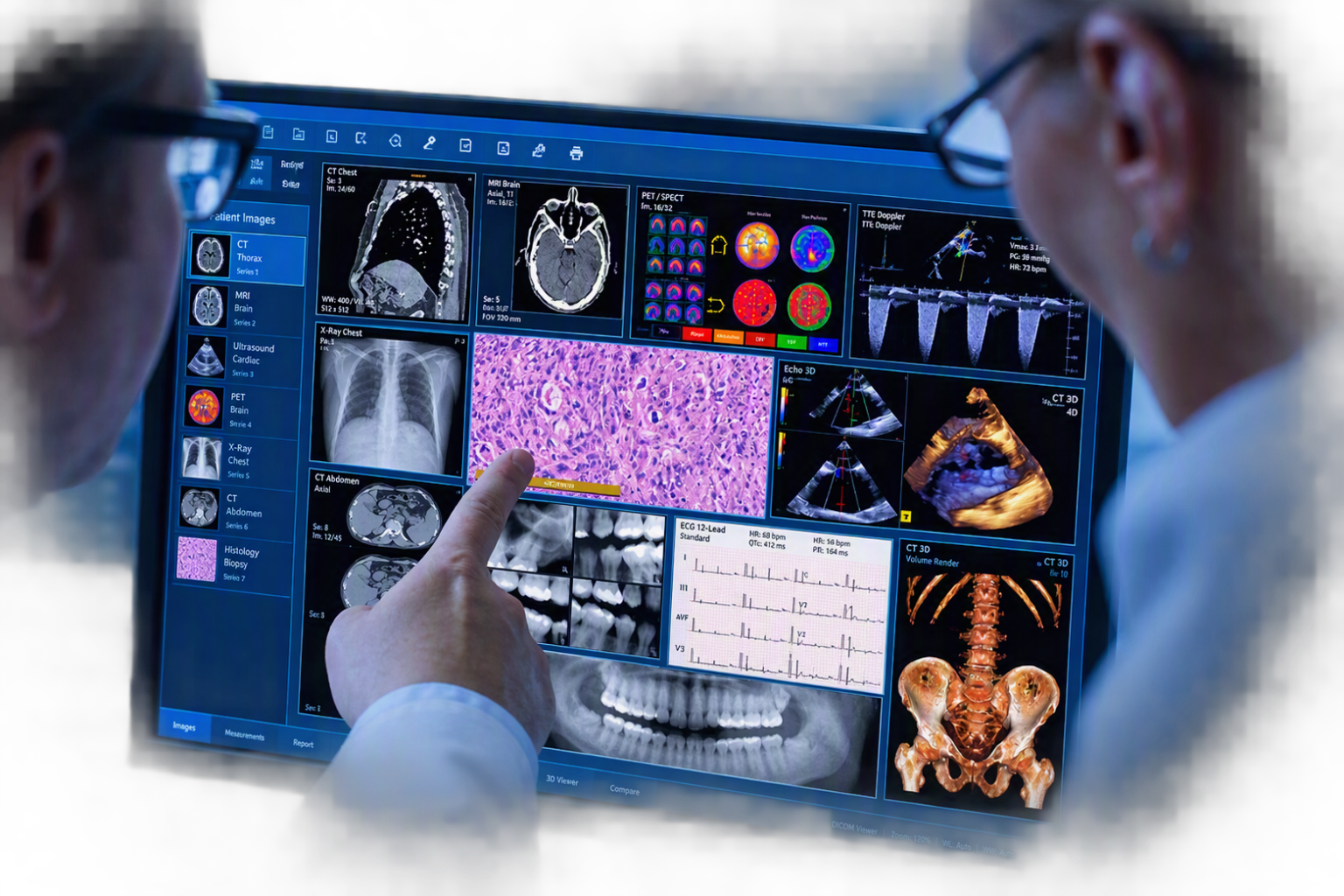 A broader view of clinical information
A key focus of the Dortmund project was to move beyond a PACS-centric model and support the sharing of both DICOM and non-DICOM content. This includes imaging studies as well as supporting clinical records, reports and documents from radiology, cardiology and other specialist areas.
Through standards-based interoperability, including DICOM, HL7 and FHIR services, DeepUnity eVNA supports the exchange of healthcare information across systems and workflows. This approach helps create a single access point for supported clinical content, reducing reliance on disconnected archives and supporting better collaboration across the care environment.
“What makes DeepUnity Enterprise VNA (eVNA) particularly compelling is its ability to extend beyond traditional image archiving and support a broader enterprise content strategy. By unifying clinical content, both DICOM and non-DICOM, within a single platform, healthcare organisations can eliminate information silos, enhance access to clinical data, and establish a scalable foundation for future digital health initiatives,” says Lusan Segaram, Business Lead, Diagnostic Imaging IT, Dedalus ANZ
Supporting future digital health initiatives
DeepUnity eVNA provides a scalable, vendor-neutral platform that can help hospitals and health services reduce information silos, support interoperability and create a stronger foundation for enterprise imaging and broader clinical content strategies.
“Healthcare organisations across New Zealand are under increasing pressure to manage growing volumes of clinical information while maintaining accessibility, security and interoperability,” says Mika Joronen, General Manager, New Zealand, Dedalus ANZ
“Dedalus is best known and trusted here for our patient administration and electronic medication management systems used nationwide: the Klinikum Dortmund deployment demonstrates how our Enterprise VNA can also enable healthcare providers to consolidate information, improve collaboration and support better patient care outcomes.”
An opportunity for ANZ
The Klinikum Dortmund success story highlights how enterprise imaging can become more than a technology project. By bringing clinical content together through a unified archive strategy, healthcare organisations can support more consistent access to patient information, simplify long-term content management and create the digital infrastructure needed for future innovation.
For ANZ healthcare providers, this means an opportunity to rethink how imaging, documents and clinical content are managed across the enterprise. With DeepUnity eVNA, Dedalus supports healthcare organisations in designing a more connected, interoperable and future-ready approach to healthcare data management.
If you have any questions re the above feature article, please contact the editor Rebecca McBeth. 
Read more FEATURES
Return to eHealthNews.nz home page
|

 Email to a Friend